Posts

Assessment and Technology

Image
Assessment and technology together provide endless possibilities. I think that technology has been such an asset to education. It can provide authentic assessments that are similar to real life experiences. It can allow for a more accurate measure of the student’s ability to apply knowledge in various ways. Conker AI is an example that shows that technology is such a unique way to generate exit tickets, check ins, informal assessments, and more. (Merrow, L. 2023) Digital Technology has been a game changer for the students in my program. Digital technologies are electronic tools, devices, systems, and resources which generate, store or process data. (IGI Global. 2021) Given that all of my students have disabilities that impede their learning, traditional paper and pencil tasks are not effective. The use of Digital Technology has provided them a safe and engaging approach to learning and assessment. By using cell phones and iPads, the adult learners can use the Digital Technology to help...
Understanding Constructivism and Constructionism in Education

Image
  Understanding Constructivism and Constructionism in Education In the ever-evolving landscape of educational theory, two concepts often emerge as foundational paradigms for understanding how individuals learn: constructivism and constructionism. Though closely related, these theories present distinct approaches to the learning process, each with its unique principles and applications. This blog post aims to elucidate the differences between constructivism and constructionism, highlighting their respective contributions to educational practice. Constructivism: Knowledge Through Experience Constructivism is a theory that posits that learners construct knowledge through their experiences and interactions with the world. Originating from the work of Jean Piaget, constructivism emphasizes the active role of the learner in the knowledge acquisition process. According to Piaget, “cognitive development occurs through a series of stages, where learners build upon their existing knowledge b...

Creative Commons

Image
  The Creative Commons (CC) license is a globally recognized framework that facilitates the sharing and use of creative works under specified conditions. Designed to increase access to and encourage the dissemination of creative content, CC licenses allow creators to communicate which rights they reserve and which rights they waive for the benefit of recipients or other creators. As an Adult Transition Teacher, I teach my adult learners about CC. We research various CCs and learn about the various details involved. The framework includes several types of licenses, each permitting different degrees of usage. The six main CC licenses range from the most permissive (CC BY) to the most restrictive (CC BY-NC-ND): CC BY (Attribution) : Allows others to distribute, remix, adapt, and build upon the work, even commercially, as long as they credit the original creation. CC BY-SA (Attribution-ShareAlike) : Similar to CC BY but requires that derivative works be licensed under identical terms. ...

Creative Blog Assessment

Image
  The Value of Creative Assessments in Education Creative assessments serve as a vital tool in evaluating individual creativity. Unlike traditional assessments, creative assessments encourage students to think outside the box, fostering problem-solving skills and a deeper investment in the learning process. I find that my students become invested in the process of learning and not just the outcome of the activity.   Creativity encompasses a range of cognitive abilities, Including: Divergent thinking and the ability to use creative constraint for generating new ideas Connective thinking and the concept of mash-ups Iterative thinking and the capacity for making revisions Ideation and the ability to formulate new concepts Original thinking Lateral thinking and the idea of solving problems in a slower, more indirect way Problem-solving Hands-on prototyping Communicating key ideas Empathy Inquiry and curiosity Creative risk-taking Experimentation and data gathering (Spencer, 2021) ...

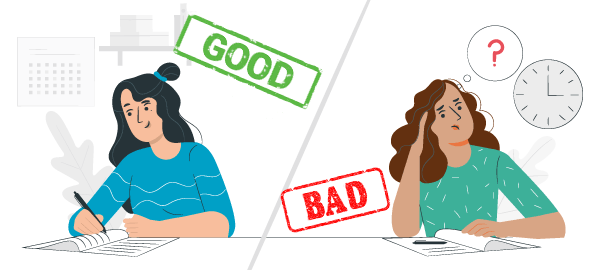
My Worst Assessment

Image
(Botsula, M. 2021) When working with 18 - 26 year old adults with various disabilities, teaching them life skills can be challenging. Adult Living skills are taught within the classroom and must be transferred to the community or job site with the expectation of the individual transferring the skills independently. The problem is that these individuals have difficulty transferring the skills taught. One skill in particular is the transfer of money skills. In the classroom, the students can count how much money is needed to make a transaction.  However, when we go shopping at Walmart, the money skills do not transfer to the point-of-service. After going to Walmart several times with the students, it was apparent that there were deeper issues to the problem than just being able to transfer money skills to the retail environment. The students had to navigate the store, choose items that were the correct size and dollar amount, and determine whether they were able to navigate the proce...

My Best Assessment

Teaching in the field of Special Education is profoundly rewarding, though it presents unique challenges that significantly impact students, peers, staff, and family members. For instance, I  had a student, “John”, a 22-year-old young man with Autism Spectrum Disorder (ASD) and severe Obsessive-Compulsive Disorder (OCD). Autism Spectrum Disorder is a complex neurological and developmental disorder affecting a person’s behavior, communication, learning, and social interactions (Special Olympics Missouri, 2022). Obsessive-Compulsive Disorder is characterized by uncontrollable, recurring thoughts (obsessions) and repetitive behaviors (compulsions) that can significantly interfere with daily life ( Obsessive-Compulsive Disorder, 2024). The combination of ASD and OCD poses substantial challenges, often leading to behaviors ranging from rocking back and forth to more aggressive actions such as hitting, shouting, spitting, kicking, and throwing objects. Social situations also make John v...